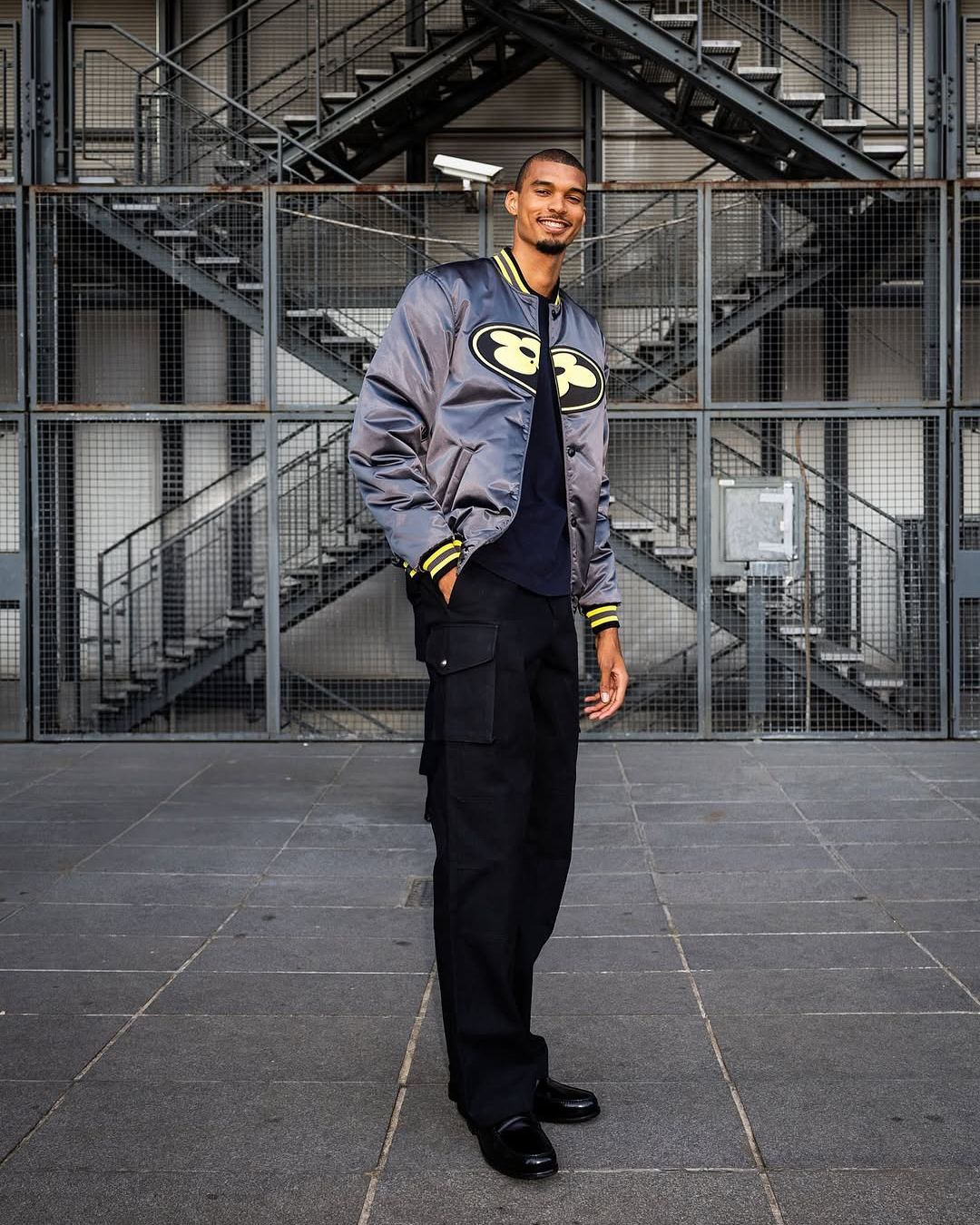
Where are we with the Wembanyama project? He has already become the new face of the NBA
The NBA regular season has just ended, but the Playoffs are about to begin. Among the sixteen teams still in contention, one of the most ambitious is the San Antonio Spurs, a historic Texas franchise coming off nearly two decades of dynasty, during which they captured five titles in six Finals appearances between 1999 and 2014. Beyond winning, the Alamo City team has always stood out for its diverse roster construction, investing in a pioneering scouting system aimed at identifying top talent even outside the United States.
Under the guidance of an icon like coach Gregg Popovich, who became President of Basketball Operations in 2025 after twenty-nine seasons on the bench, a true basketball melting pot has taken shape. Among Europeans, players such as Anthony Parker, Boris Diaw, and Marco Belinelli have stood out over the years, alongside South Americans like Manu Ginobili, Tiago Splitter, and Fabricio Oberto, all the way to recruiting an Australian Aboriginal player on the fringes of the league like Patrick Mills. Now, the franchise has reached the next level.
Although these are all legends of the game, the franchise has historically leaned on American superstars. Tim Duncan, despite being born in the U.S. Virgin Islands, won bronze with Team USA at the 2004 Athens Olympic Games. Before and alongside him was David Robinson, nicknamed The Admiral for his service in the U.S. Navy. More recently—albeit for less time than expected—the torch passed through the massive hands of California native Kawhi Leonard. Now it is the turn of Victor Wembanyama, born in Le Chesnay in the Île-de-France region, 20 kilometers west of Paris. He is the current face of the San Antonio Spurs—and the future face of the NBA, especially after a season like this one.
Wembanyama’s MVP-Level Season
In the NBA, the Most Valuable Player, or MVP, is awarded to the player who stands out the most over the course of the 82-game regular season for their positive impact on their team. For this reason, it is often given to the best individual performer among the elite of each Conference, also depending on win totals. Under Wembanyama’s leadership, the San Antonio Spurs won 62 games, securing the second-best record in the league—just two games behind the defending champion Oklahoma City Thunder and even ahead of the Detroit Pistons, a young team that dominated the Eastern Conference.
Not only did San Antonio end a six-season Playoff drought, but it also won more than 60 games for the first time since 2017, finishing with the third-best regular season record in franchise history. Wembanyama’s impact has been especially evident on the defensive end, where he completed his third NBA season leading the league with over three blocks per game. To put that into perspective, the second-ranked shot blocker, fellow Frenchman Alex Sarr of the Washington Wizards, averages just 2.0. Only Marcus Camby and Dikembe Mutombo—Defensive Player of the Year winners—have led the league in blocks for three consecutive seasons.
But his strength is not limited to contesting shots at unimaginable heights thanks to his 7-foot-4 frame. His real quality lies in combining those extraordinary physical tools with guard-like agility, allowing him to defend quicker players. His all-around impact can be measured through a statistic called On/Off, which calculates a team’s performance difference when a player is on the court versus off it, normalized per 100 possessions. With Wembanyama on the floor, the Spurs allow 12.3 fewer points per 100 possessions—the best mark in the league.
To put it in simpler terms, San Antonio with him on the court has the best defense in the NBA, even better than the Thunder, while without him they drop to 23rd, among the league’s bottom ten. Add to this 25 points per game in just 29.2 minutes, consistent three-point shooting, and dominance on the boards, and you get an MVP candidate. The race with Shai Gilgeous-Alexander and Nikola Jokic is tight—but anything can happen. Especially considering Wembanyama is only 22 years old, in just his third season, and entering his first Playoffs. His ceiling is limitless.
A Phenomenon On and Off the Court
Recently, the NBA released its list of top-selling jerseys for the season. As usual, major markets dominate: Stephen Curry ranks first, Jalen Brunson third, and LeBron James fifth—representing San Francisco, New York, and Los Angeles, respectively. In second place is the top European, Luka Doncic, now a teammate of James with the Lakers following his shocking 2025 trade from Dallas to Los Angeles. For the first time in his career, Wembanyama has cracked the top five, finishing in fourth place—no small feat for a non-American or Canadian player. Nikola Jokic, for instance, ranks tenth, while Giannis Antetokounmpo was already outside the top ten in 2025.
The NBA has invested heavily in new media platforms beyond traditional television. Its latest media rights deal—worth $76 billion over eleven years—includes agreements with ESPN/ABC, NBCU, and especially Amazon Prime Video, which will broadcast the early stages of the Playoffs. Partnerships also extend to Peacock, ESPN+, Paramount, and YouTube TV, in addition to the league’s own NBA League Pass. Access via smartphones has become a massive advantage for providers, and the NBA has capitalized on this with strong digital marketing.
The NBA’s Instagram account boasts over 90 million followers, compared to the NFL’s 33 million. Among major U.S. sports leagues, seven of the top ten most-followed teams belong to the NBA. Within this massive digital marketing effort, Wembanyama-related content ranks second in total views, with 2.43 billion—trailing only LeBron James at 2.85 billion.
Why Is Wembanyama So Popular?
Victor Wembanyama stands out from every previous NBA superstar because he captivates audiences while remaining authentically himself. He does not isolate himself like Tim Duncan—whose understated personality still affects his post-career popularity—nor does he seek spectacle like LeBron James. Wembanyama is the same person whether he’s asking on X for the best places to play chess in New York, ending up surrounded by onlookers in Washington Square Park while planning his next move, or speaking out in a press conference against immigration enforcement violence in Minneapolis, despite PR advice to stay cautious.
He is the same individual who spent ten days in China in the summer of 2025, appearing in viral photos in front of Mao Zedong’s portrait and quietly staying at the Shaolin Temple in Zhengzhou, before returning to Texas to train with Kevin Garnett. He is one of the most visible faces on NBA social media, yet deliberately avoids screen overexposure, always carrying a book—preferably fantasy novels by Brandon Sanderson—to disconnect from reality and manage media pressure.
Nike and the Alien Brand
Wembanyama is also distinguished by a sharp awareness of his public image. A fashion enthusiast, he even guided teammate Chris Paul through Fashion Week during the NBA’s Paris Global Games in 2025. In 2024, he became an ambassador for Louis Vuitton, which expanded its athlete roster ahead of the Paris Olympics. Most notably, Wembanyama partnered with Nike, which executed a brilliant campaign for the launch of his first signature shoe, the Nike Air Zoom Hustle 2, released in May 2024. The design features an alien face on the heel—reflecting his nickname, The Alien, coined by LeBron James in 2022 after witnessing a 37-point performance in France.
Nike turned that nickname into a full-fledged brand identity, even creating early promotional merchandise ahead of the 2023 NBA Draft. The campaign peaked with a video released during the April 2024 solar eclipse, featuring crop circles forming the alien logo—an example of masterful live marketing. At the Nike On Air event in Paris, Wembanyama showcased a futuristic, AI-designed shoe created via 3D printing. Displayed at the Centre Pompidou during the Olympics, the model—size 57—resembled a spaceship, perfectly aligning with his extraterrestrial persona.
NBA Europe and Future Expansion
The NBA is no longer just American—it is global. Under commissioner Adam Silver, the league has launched a collaboration with FIBA to create a new European competition under the umbrella of NBA Europe. What initially seemed like a clash with EuroLeague Basketball may instead evolve into a partnership. The project is ambitious, requiring massive financial investment—entry fees between $250 and $500 million. To support this, the NBA is engaging investors already familiar with the European sports ecosystem. In Milan, for example, RedBird Capital—owner of AC Milan—is involved, with potential collaborations ranging from multi-sport ventures to partnerships with local basketball clubs.
Such a transformation requires not only strategy but also ambassadors—and few are better suited than Victor Wembanyama. During the 2025 Paris Games, his image dominated the Champs-Élysées, he participated in numerous events, and went viral with a video juggling a basketball at the Paris Saint-Germain stadium. The event drew record attendance at Accor Arena and massive streaming numbers. His presence at PSG was part of a broader strategy involving meetings between Adam Silver and Nasser Al-Khelaïfi. Future Global Games are already planned in Paris, Manchester, Berlin, and London. With the NBA’s integration into Europe already at an advanced stage, Victor Wembanyama’s rise as the league’s next global face could become the decisive step toward a fully hybrid basketball ecosystem.
What to read next

LeBron James will commute from New York to Philadelphia by helicopter
And Fanatics probably will pay for it